

Tips on getting started running
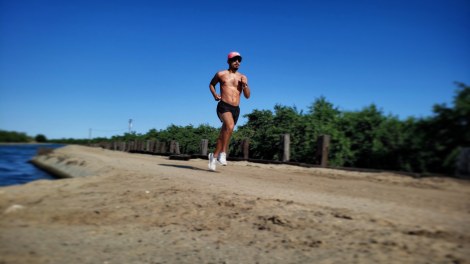
I get this question all the time. “I want to start running but I don’t know how.” “How do I start running, I hate it so much.” or “How do I run? Are shoes really that important? What brand would you prefer?”
In this blog I will go over some tips on how to get started running and mention some of the gear you will need. I will also give you some pointers on what to expect for your first run and how to continue being motivated to get after it!
Let’s start with gear.
Shoes
Shoes are going to be something you want to put some extra thought into. The right shoe for you will make running really fun and enjoyable. The wrong shoe will make you hate running…or cause some discomfort at the least.. So taking the time to research and try out different shoes until you find what suits you best is ideal. Not sure what shoe is right for you? Ask a professional. If you live near a local running shoe store like Fleet Feet, they have the right people who can help you find out the perfect shoes for you.
You can also use the below shoe characteristics at Runningwarehouse.com and use their “Shoe Finder” to find what’s best for you as well.
Here are some things to consider when buying shoes.
Shoe Size
The proper shoe size will make a big difference in the feel of the run. Too tight of a shoe and your toes will be cramped and lead to some foot pain. Too large of shoe will make running feel sloppy and lead to some painful blisters.
So be sure to get properly fitted to get the most comfort out of your shoe.
Shoe Type
Think of it this way; will you be doing most of your training runs in these shoes, fast interval workouts or will you be racing your next 5k in them? Picking the right shoe for the right purpose will make training more effective and comfortable.
More cushioned shoes are best for daily training and long runs. Mid weight to light weight and minimal cushioning is best for medium to long faster paced runs and workouts. Lightweight and firm shoes are going to be what you typically race in if you’re running more shorter distances like 1 mile to 10k.
Location is another factor to take into account. There are specific shoe designed best for running on the roads or trails. So knowing where you are going to run will help when choosing the right shoe.
Stability
This is referring to how your feet move in the running gait. Do your ankles maintain a neutral position or do they roll in? Having a running shoe professional or using a camera pointed behind your feet while on a treadmill can help you determine your pronation. This will help determine if you need a supportive shoe or less support.
Off-set
This is basically how much more foam is under the heel compared to the forefoot. More foam in the heel is ideal for heel strikers to absorb the impact when running. A lower offset is ideal for those who land more mid-foot to forefoot.
Other Factors: Weight, Stack height, Brand
This is more preference and brand specific and can take some time to dial in what shoe weight, brand etc works for you.
Clothing
Clothing is not so much as important than shoes but can make a huge difference. Here are some things to consider when picking out proper running clothes.
- Always dress for the weather
- If it’s summer and hot you don’t want to be chugging through your miles in a long sleeve and sweats.
- Wearing weather appropriate clothing will make your runs more enjoyable.
- You don’t have to buy expensive athletic clothing, but you should buy clothes tailored to exercise.
- Clothing specifically for exercise will help with keeping you cool in the summer or warm in the winter and wick away sweat so that your shirt or shorts don’t become saturated and heavy or cause any painful chaffing.
- Wear shorts or pants that stretch and provide proper range of motion.
- Words every runner should know when it comes to running clothing: COTTON IS ROTTEN. So it is best to stay away form cotton.
My Favorites
This is a list of some of my favorite gear that I use on my runs.
My Favorite Shoes

These are my go too for running. They are great from short and easy runs to even long runs. A lot of soft cushion but can be used for some faster paces as well.
My Favorite Top

Nike Men’s Core Pro Slim Short Sleeve Top
I like to keep it pretty simple with my tops and nike does it pretty well.
My Favorite Bottom

These shorts are by far my favorite right now. Super light weight and breathable. They stretch nicely and just feel great.
My Favorite Socks

Injinji Run Lightweight No-Show Toesocks Black
My wife actually turned me onto these socks and I was hesitant at first but let me tell you, these things were a game changer! Great for those who get blisters easily. These things will save your toes!
Tracking your runs
Tracking your runs can help keep track of your progress so you have a sense of how your training is going. GPS watches or Smartphone Apps that have GPS tracking capabilities is a great way to guid you on your runs. You don’t need a fancy watch or app, or you can splurge if your heart desires.
Apps:
Apps are an easy way to track your runs because most apps are free to use and you already have a smartphone. They can track distance, time and pace.


GPS Watches:
GPS Watches are for those who want little more data. They can do what other apps can such as distance, time and pace amongst many other things such as; elevation gain/loss, heart rate, cadence, stride length, vertical oscillation and much more.

Garmin Forerunner 45 $199

Garmin Forerunner 245 $349 (My Current Watch)
Going for your first run
It’s time for you to go our for your first run. I will be honest, it might not go so well but that is OKAY! Running for even the most seasoned veterans can be rough at times but with time you will love running, even on the hard days.
I like to tell other who are getting into running to just take it easy and not set high expectations. Making running a regular habit will take time.
Always start out slow and at a comfortable pace that you can handle for 10 to 15 minutes. You can even do the walk 1 minute jog 1 minute method when first starting out. Point is, don’t over do it your first time out.
Here is an example starting run;
10 – 15 minutes at a pace that you can still maintain a short conversation with a partner.
You can take breaks every few minutes if needed. As you get more comfortable with running, you can increase your runs by 5 minutes.
Try to increase your time every 2-3 weeks until you reach your desired weekly mileage goal.
How to stay motivated

Running has its ups and downs. I have days where all I want to do is stay in bed and not run. Some runs I feel slow and sluggish and nothing seems to be going right. So how do I stay motivated to keep running?
- Switch up the scenery
- Running the same path and route everyday gets boring. Try a new route. Go on a trail, run along the beach, or simply run your normal route backwards!
- Run with other people!
- Running with someone else can greatly make your runs more fun. Having conversations and someone to help keep the run off of your mind is a great way to stay motivated and look forward to running.
- Switch up your workouts
- Try doing a new workout or modify your typical workout to make it more challenging by adding some hills, or do a workout you’ve never tried before.
- Stop saying “I have to run today”, instead say “I get to run today!”
- My wife said this to me. I like it a lot. Because sometimes we impose these irrational standards that we must do this and do that. But truth is, we get to run. We get to work on our health both physically and mentally. We should try to appreciate the time we get to clear our minds and improve our health.
Summary
This was a brief post about some tips on how to get started running. I hope this helps you on getting started. If there’s anything else you have questions about please comment or message me on social media and let me know your thoughts and questions!
Enjoy the journey and cherish the moments. This is the start to a beautiful and fulfilling journey.


 Felix On The Run